Captive Wildlife Permit
Captive wildlife in Nebraska
Nebraska law limits which wild animals can be kept in captivity or brought into the state. These rules protect public health and safety, protect Nebraska’s native wildlife and livestock from disease, and make sure captive animals receive proper care.
Animals taken from the wild can never be kept.
It is illegal to keep any wild bird or mammal taken from the wild, and the Commission cannot issue a Captive Wildlife Permit for it (Title 166, Chapter 8, 001.01D). This applies even if the species is on the Permit List, even if the animal was a baby or was injured or appeared orphaned, and even if you only meant to help it. A permit cannot be issued after the fact to cover an animal that was already taken. Every animal held under a Captive Wildlife Permit must come from a licensed breeder or another permit holder, with proof of purchase.
If you find a wild animal that appears to need help, leave it where it is and contact a permitted wildlife rehabilitator, such as Nebraska Wildlife Rehab, or your local conservation officer. Only permitted rehabilitators may care for injured or orphaned wildlife, with the goal of returning them to the wild.
Many animals sold legally in other states cannot be brought into or kept in Nebraska, so before you buy any animal, review this page to determine whether it is legal to own in Nebraska.
Steps for obtaining captive wildlife
- Check whether the animal is banned. State law prohibits keeping wolves, skunks, bears, and all wild and hybrid cats, including Bengal and Savannah cats. Several other species are restricted. If the animal is on the Prohibited Wildlife list, it cannot be kept in Nebraska. Threatened and endangered species require a special permit even if they are not native to Nebraska.
- If the animal is not banned, review the requirements below.
| Origin | Bought in Nebraska | Brought from another state |
|---|---|---|
| Native to Nebraska (raccoon, fox, squirrel, pheasant, etc.) | Must be on the Captive Wildlife Permit List. Permit required. | Must be on the Captive Wildlife Permit List and the Import List. Permit required. |
| Not native to Nebraska (sugar glider, wallaby, parrot, etc.) | No permit required. Contact a conservation officer about species not on the Import List. | Must be on the Import List. No permit required. |
Example scenarios
A raccoon from a Nebraska breeder. Native, bought in Nebraska. Raccoons are on the Permit List, so it can be kept with a permit.
A raccoon from an Iowa breeder. Native, brought from another state. Raccoons are on the Permit List but not the Import List, so it cannot be brought into Nebraska.
A red fox from a Kansas breeder. Native, brought from another state. Red foxes are on both lists, so it can be brought in and kept with a permit.
A sugar glider from a Missouri breeder. Not native, brought from another state. Sugar gliders are on the Import List, so it can be brought in, and no permit is needed.
A monkey from a Texas breeder. Not native, brought from another state. Primates are not on the Import List, so it cannot be brought into Nebraska.
The Captive Wildlife Permit List applies only to wild birds and wild mammals that are native to Nebraska, migrate through the state, or have established wild populations here, such as raccoons, foxes, squirrels, pheasants, and ducks. If a native animal is on the list, you may keep it with a Captive Wildlife Permit obtained before you acquire it.
If it is not on the list, it cannot be kept.
Mammals
- Badger (Taxidea taxus)
- Beaver (Castor canadensis)
- Bobcat (Lynx rufus), fur production only
- Canada lynx (Lynx canadensis), fur production only
- Cottontail rabbit (Sylvilagus floridanus)
- Fox, gray (Urocyon cinereoargenteus) and red (Vulpes vulpes)
- Mink (Mustela vison), except mutation mink
- Muskrat (Ondatra zibethicus)
- Opossum (Didelphis virginiana)
- Raccoon (Procyon lotor)
- River otter (Lutra canadensis) Squirrel, fox (Sciurus niger), gray (Sciurus carolinensis), and flying (Glaucomys volans)
- Weasel, long tailed (Mustela frenata)
- Sheep Bighorn (restricted in Banner, Box Butte, Cheyenne, Dawes, Kimball, Morrill, Scotts Bluff, Sheridan and Sioux counties)
Birds
- Crows, federal permit also required
- Ducks, all wild species, federal permit also required
- Geese, all wild species, federal permit also required
- Grouse, sharptailed (Tympanuchus phasianellus) and prairie chicken (Tympanuchus cupido)
- Partridge, Hungarian (Perdix perdix) and chukar (Alectoris chukar)
- Pheasant, ringneck or common (Phasianus colchicus)
- Quail, bobwhite (Colinus virginianus)
- Swan, trumpeter (Cygnus buccinator) and tundra (Cygnus columbianus), federal permit also required
- Turkey, all wild subspecies (Meleagris gallopavo)
- All other species protected by the Migratory Bird Treaty Act, federal permit also required
- Eggs of the approved species
The Import List is about where the animal comes from. It applies to any animal brought into Nebraska from another state or country, whether native or not. If the animal is not on the list, it cannot be brought in, even if it is legal where you bought it.
Only the wildlife on the Import List below may be brought into Nebraska. Limited exceptions apply to accredited zoos, government facilities, certain USDA licensed exhibitors and circuses, and animals passing directly through the state. Check the scientific name. A similar animal is not automatically covered.
- Alpaca (Lama pacos)
- Blackbuck (Antilope cervicapra)
- Camel (Camelus dromedarious)
- Chinchilla (Chinchilla species)
- Coatimundi (Nasua species)
- Degu (Octodon species)
- Eland (Taurotragus species)
- Elk (Cervus canadensis)
- Fallow deer (Dama dama)
- Fox – red, Arctic and other true foxes; not gray fox (Vulpes species)
- Genet (Genetta species)
- Gerbil (Gerbillus species)
- Goats, wild (Capra aegagrus, Capra hircus, and Oreamnos americanus)
- Guanaco (Lama guanicoe)
- Guinea pig (Cavia porcellus)
- Hedgehog, Eurasian – not African pygmy (Erinaceus species)
- Jerboa, greater (Jaculus blanfordi)
- Llama (Lama glama)
- Pere David’s deer (Elaphurus davidianus)
- Reindeer (Rangifer tarandus)
- Sheep: aoudad, bighorn, mouflon, thinhorn (Ammotragus lervia, Ovis canadensis, Ovis ammon, Ovis dalli)
- Sika deer (Cervus nippon)
- Sugar glider (Petaurus species)
- Tahr (Hemitragus species)
- Vicuña (Vicugna vicugna)
- Wallaby (Macropus and Petrogale species)
- Water buffalo (Bubalus bubalis)
- Yak (Bos grunniens)
- Birds (All ratites, waterfowl, peafowl, game birds, and cage and aviary birds (monk parakeets excluded))
NO PERSON SHALL KEEP THE FOLLOWING IN CAPTIVITY IN NEBRASKA NOR WILL A PERMIT BE ISSUED:
- Wolves and wolf hybrids
- Skunks
- All wild and hybrid cats, including cougars, tigers, servals, and Bengal and Savannah cats, regardless of generation or registration. House cats are not included. For bobcats and lynx, see the Permit List.
- Bears
- White-tailed deer and mule deer
- Red deer and their hybrids
- Wild pigs, including European wild boar and any animal with the physical or behavioral characteristics of a wild pig
- Asian raccoon dogs
- Bighorn and thinhorn sheep in Banner, Box Butte, Cheyenne, Dawes, Kimball, Morrill, Scotts Bluff, Sheridan, and Sioux counties
- Hawks, owls, and eagles, except under falconry or rehabilitation permits
- Threatened and endangered species and species in need of conservation, including black-tailed and white-tailed jackrabbits and the short-horned lizard, except under special permit
- Any native bird or mammal not on the Permit List, such as coyotes
Domestic animals are not wildlife and are not regulated by the Commission. These include dogs, house cats, domestic ferrets, hamsters, domestic rats and mice, rabbits, horses, cattle, domestic sheep and goats, domestic pigs, and poultry. Hybrid cats with wild ancestors are not domestic cats under state law.
Steps for obtaining a Captive Wildlife Permit
- Confirm the species is on the Permit List and is not prohibited.
- Check with your city or county to make sure the animal is allowed where you live.
- Build pens or enclosures that provide adequate shelter and prevent escape.
- Apply online at www.gooutdoorsne.com and select “Commercial Hobbyist,” or mail the Captive Wildlife Application with payment of $33 to: Nebraska Game and Parks Commission, P.O. Box 30370, Lincoln, NE 68503.
- A conservation officer will inspect your enclosures. Once you pass inspection, your permit will be issued.
- Buy only the animals listed on your permit, and only from a licensed breeder or another permit holder. Keep proof of purchase.
- When selling or transferring animals, issue a sale/transport tag. Tags are available from the Permits department at [email protected] or your local Commission office.
- Report and renew by January 15 each year, online or by mail. You may decline renewal when you report.
Applying in November or December? Select the year you want your permit to start. Permits issued in November or December still require reporting and renewal in January.
Commonly-asked animals
The tables in the dropdowns below cover animals the Commission is most often asked about. If your animal is not listed, check the full lists below or contact us before you buy.
| Animal | Bring into Nebraska? | Keep in Nebraska? | Captive Wildlife Permit needed? | Notes |
|---|---|---|---|---|
| Bengal, Savannah, or other hybrid cat | No | No | Not available | Hybrids with a wild cat ancestor are banned by state law regardless of generation or registration. |
| Serval, tiger, cougar, or other wild cat | No | No | Not available | Banned by state law. |
| Bobcat or Canada lynx | No | Fur production only | Yes | Not allowed as pets. |
| Wolf or wolf hybrid | No | No | Not available | Banned by state law. |
| Bear (any species) | No | No | Not available | Banned by state law. |
| Skunk (any species) | No | No | Not available | Banned by state law, including descented skunks. |
| Coyote | No | No | Not available | Native, but not on the permit list. |
| Red fox | Yes | Yes | Yes | Permit required before you acquire the animal. |
| Gray fox | No | Yes | Yes | Must come from a Nebraska breeder or permit holder. |
| Raccoon | No | Yes | Yes | Must come from a Nebraska breeder or permit holder. Never from the wild. |
| Domestic ferret | Yes | Yes | No | Domestic animal, not regulated by the Commission. |
| Animal | Bring into Nebraska? | Keep in Nebraska? | Captive Wildlife Permit needed? | Notes |
|---|---|---|---|---|
| Squirrel (fox, gray, or flying) | No | Yes | Yes | Must come from a Nebraska breeder or permit holder. |
| Opossum or cottontail rabbit | No | Yes | Yes | Must come from a Nebraska breeder or permit holder. |
| Whitetail or mule deer | No | No | Not available | Restricted species. |
| Elk | Yes | With Dept. of Agriculture permit | No | Regulated by the Nebraska Department of Agriculture. |
| Wild pig or European wild boar | No | No | Not available | Restricted species. |
| Bighorn sheep | Yes | Yes except in 9 Panhandle counties | Not available | Prohibited in Banner, Box Butte, Cheyenne, Dawes, Kimball, Morrill, Scotts Bluff, Sheridan, and Sioux counties. |
| Sugar glider | Yes | Yes | No | |
| Wallaby | Yes | Yes | No | |
| Coatimundi | Yes | Yes | Yes | |
| Kangaroo | Yes* | Yes* | Not available | *Allowed if genus Macropus. |
| Chinchilla, degu, gerbil, or guinea pig | Yes | Yes | No | |
| Llama, alpaca, camel, or yak | Yes | Yes | No | Nebraska Department of Agriculture requirements may apply. |
| Monkey, lemur, ape, or other primate | No | No | No | Not on the Import List. Federal law also bars importing primates into the U.S. as pets. |
| Animal | Bring into Nebraska? | Keep in Nebraska? | Captive Wildlife Permit needed? | Notes |
|---|---|---|---|---|
| Peafowl | Yes | Yes | No | |
| Pheasant, quail or partridge | Yes | Yes | Yes | No permit if released within 14 days of purchase. See Raising Wild Birds. |
| Wild turkey | Yes | Yes | Yes | |
| Wild ducks and geese | Yes | Yes | Yes | Federal permit also required. |
| Crow | No | Yes | Yes | Federal permit also required. |
| Hawk, owl or eagle | No | Falconry or rehabilitation only | Not available | Federal permit also required. |
| Color phase pheasant or bobwhite (white, melanistic, snowflake, etc.) | Yes | Yes | Yes | Same rules as wild pheasants and quail. No permit if released within 14 days of purchase. |
| Ornamental pheasant (golden, Lady Amherst’s, silver, Reeves’s) | Yes | Yes | No | Not native to Nebraska. |
Raising wild birds
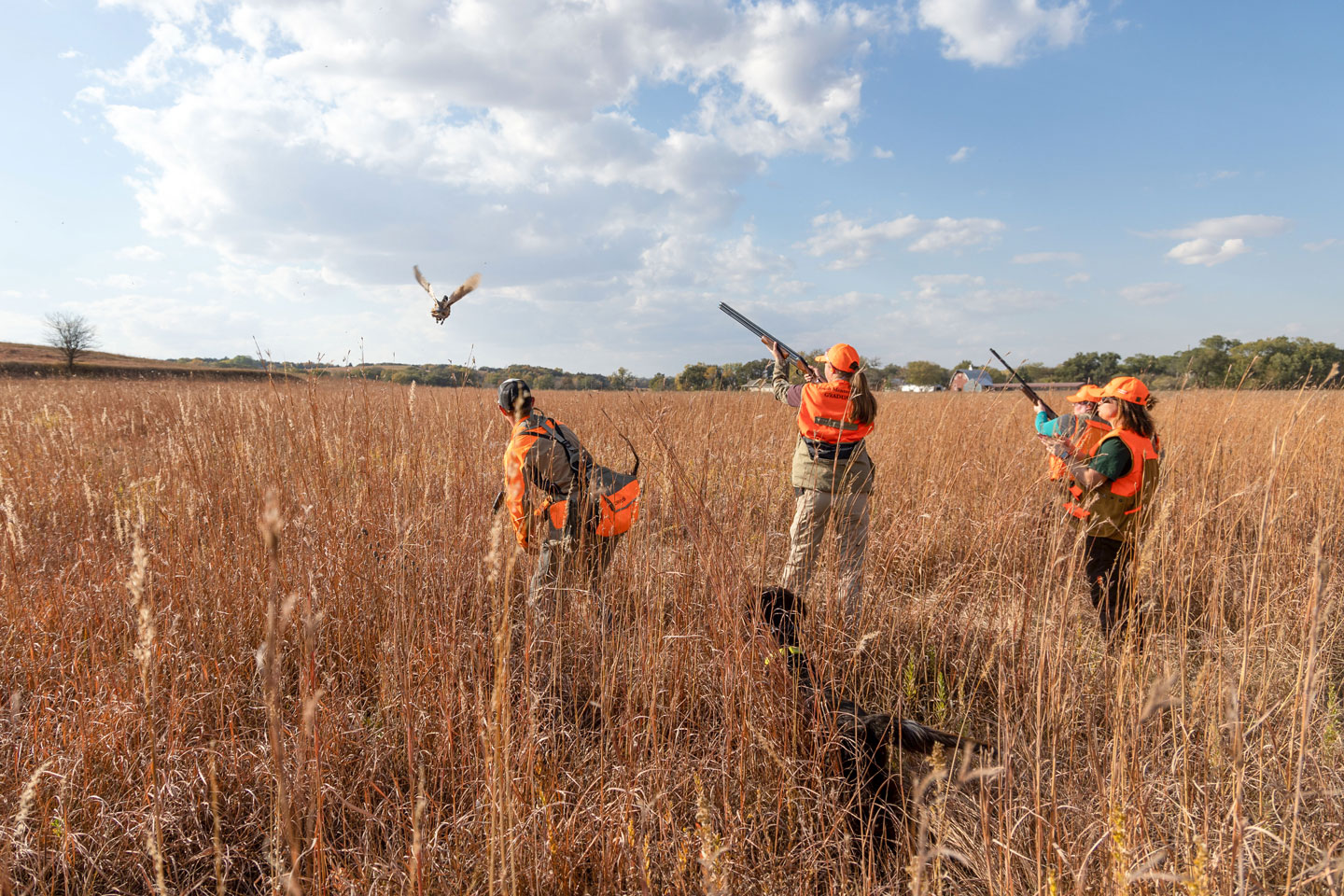
Pheasants, quail, mallards, and partridge (chukar and Hungarian) may be raised and released on privately owned land but may not be released on public land. A Captive Wildlife Permit is required if these birds are kept more than 14 days after purchase. Birds purchased for dog training and released within 14 days of purchase do not require a Captive Wildlife Permit. Birds must come from a permit holder or licensed nonresident breeder and be banded.
Controlled Shooting Areas and falconry have their own rules and do not require a Captive Wildlife Permit. See Controlled Shooting Areas and Falconry.
Important things to know
- Legal in another state does not mean legal here. Many animals that can be bought or owned legally in other states cannot be brought into or kept in Nebraska. Check the rules before you buy. If an animal is brought into Nebraska illegally, it may be seized.
- It is illegal to release captive wildlife or any animal not native to Nebraska into the wild without Commission approval. Released animals can spread disease, compete with native wildlife, and establish invasive populations. Pen raised pheasants, quail, partridge, and mallards are the exception.
- Cities and counties may restrict or prohibit animals that state law allows. If you live within city limits, check with your local animal control office, city attorney, or city office before acquiring any animal. The following agencies may have additional regulations:
- Nebraska Department of Agriculture: health requirements for animals entering the state, and captive deer and elk facilities.
- U.S. Fish and Wildlife Service: migratory birds and federally threatened or endangered species.
- USDA Animal and Plant Health Inspection Service: commercial breeders, dealers, and exhibitors.
Contact us
If your animal is not listed on this page, contact us before you buy it. Please include the animal's common name and, if you know it, its scientific name.