Small Game & Waterfowl Guide
Plan your next hunting trip with the help of our Small Game & Waterfowl Guide.

DISCLAIMER – The Nebraska Game and Parks Commission’s Small Game and Waterfowl Guide is a summary and not intended to be a complete digest of Nebraska’s regulations, orders and statutes pertaining to hunting small game and waterfowl in Nebraska. Automated translations from the original English language content should not be considered exact. View official rules, orders and regulations here.

Download or request a guide
The annual Small Game & Waterfowl Guide is also available as a downloadable digital flipbook. If you prefer a hard copy, you can also request a free copy by mail by filling out our brochure request form. Copies are also available at all Game and Parks offices and through our permit vendors.
General information
The Small Game & Waterfowl Guide gives you the latest regulations on hunting in Nebraska, as well as applications, public access information and more. Find information about what’s new for big game hunting in Nebraska in 2026, along with requirements, rules and regulations, and more in the tabs below.
New in 2026
- Duck zones – There now is a three duck-zone configuration instead of four. Boundary changes to duck zones and goose units approved by commissioners in 2025 resulted in duck Zone 4 being relabeled to Zone 1. The former Zone 1 is being absorbed into Zone 2. View 2026-2030 duck zones here.
- Early teal season – There again will be a nine-day early teal season in both Low Plains and High Plains zones in 2026 due to blue-winged teal breeding population status.
- Light Goose Conservation Order – Platte River restrictions during the Order were modified to account for an earlier stopover of whooping cranes during the spring.
- Squirrel season – The close of squirrel season has been extended to the last day of February to align it with other seasons.
Requirements & rules
Below is a summary of the rules and requirements for big game hunting in Nebraska. Find official rules, orders and regulations here.
Nontoxic shot is required for all shotgun hunting on waterfowl production areas, national wildlife refuges, some state wildlife management areas, as posted, and other lands as listed in the Public Access Atlas. It is unlawful to use or possess shotgun shells loaded with or containing shot other than nontoxic shot while hunting, taking or attempting to take waterfowl.
Legal non-toxic shot
- Bismuth-tin
- Iron (steel)
- Iron-tungsten
- Iron-tungsten-nickel
- Tunsten-bronze
- Tunsten-iron-copper-nickel
- Tungsten-matrix
- Tungsten-polymer
- Tungsten-tin-iron
- Tungsten-tin-bismuth
- Tungsten-tin-iron-nickel
- Tungsten-iron-polymer
Small game
Aggregate daily bag limit – the maximum number allowed to be harvested by a person in one day during an open season when that person hunts for more than one species for which there is a combined daily bag limit. It is equal to, but shall not exceed, the largest daily bag limit specified for any one species.
Aggregate possession limit – the maximum number of a single species or combination of species allowed to be possessed by a person. It is equal to, but shall not exceed, the largest possession limit specified for any one of the species.
All blinds must be removed daily from Nebraska Game and Parks Commission state recreation areas and wildlife management areas, except that seasonal blinds may be built on the WMA portions of Calamus, Elwood, Enders (the nonrefuge portion), Lake McConaughy, Medicine Creek, Merritt, Red Willow, Sherman and Swanson. Such blinds must be removed at the end of the waterfowl season. Use of these blinds is on a first-come, first-served basis.
Report U.S. Geological Survey leg bands recovered from migratory game birds at ReportBand.gov.
Wearing hunter orange is not required for upland game hunting or trapping but is strongly encouraged, especially during the November firearm deer and January late deer seasons.
Camouflage hunter orange patterns are legal if the required minimum of 400 square inches of hunter orange material displayed on a hunter’s head, chest and back is met.
Firearm hunter education is required in Nebraska for all hunters ages 12 through 29 who hunt any game species with a firearm or air gun. Hunters must carry proof of successful completion while hunting.
Apprentice certificate
The $5 Apprentice Hunter Education Exemption Certificate provides the novice hunter ages 12 through 29 an opportunity to try hunting and receive training from an experienced hunter before completing Hunter Education. A hunter using this certificate must be accompanied at all times while hunting. This certificate may be obtained once in each person’s lifetime, expires on Dec. 31 and may be renewed once for a consecutive year.
During the November firearm deer season, it is unlawful to hunt wildlife other than deer, elk or antelope with a centerfire rifle or centerfire handgun.
- EXCEPTION: This does not apply to a holder of a valid unfilled firearm deer, elk or antelope permit while hunting in the unit for which the permit was issued. It also does not apply to a bona fide farmer or rancher who owns, leases, or resides upon such farm or ranch land or a member of the immediate family of such farmer or rancher while hunting on such farm or ranch land.
It is illegal to have or carry a loaded shotgun in or on any vehicle on any highway or roadway. A shotgun is considered loaded if there is a shell or shells in the chamber, receiver or magazine.
Upland game and migratory birds
- Shotgun – Only 10 gauge or smaller may be used for all game birds. For waterfowl and other migratory game birds, including doves, shotguns must be plugged to limit shell capacity to no more than three shells in the chamber and magazine combined. No plug is required for upland game birds. No plug or gauge restriction exists for cottontail rabbits and squirrels.
- Rifle or pistol – Illegal for all game birds
- Archery – Legal for migratory game birds, rabbits, squirrels and upland game birds.
- Crossbow – Legal for rabbits, squirrels and upland game birds. NOT legal for migratory game birds.
- Trapping – Legal for furbearers, cottontails, jackrabbits and squirrels during open seasons.
- Electronic call – Prohibited for all waterfowl hunting during the fall seasons. May be used for crows.
Any private landowner or tenant may destroy or have destroyed any predator preying on livestock or poultry or suspected of causing other damage on land owned or controlled by such person without a permit issued by the Commission. Predator means a badger, bobcat, coyote, gray fox, long-tailed weasel, mink, opossum, raccoon, red fox, or skunk.
- Pheasants and prairie grouse must have head or one leg attached for identification purposes while in the field or returning home. All migratory game birds, except doves, must have one fully feathered wing or head plumage attached when in transport.
- If en route, no tags are required if licensee accompanies the game.
- It is unlawful to give, put or leave any game birds or game animals at any place or in the custody of another person unless the game is tagged with the following hunter information: name, address, phone number, date of birth, species of birds or animals and total number of each, date taken, and signature of donor and name of recipient, if transferred by gift.
- It is unlawful to possess more than a possession limit of game birds or game animals taken on a hunt permit.
- It is unlawful to possess any live furbearers.
- It is unlawful to possess more than one daily bag limit of migratory game birds while in the field or when returning from the field to one’s car, hunting camp, etc.
- If shipped by commercial carrier, game birds and game animals must be tagged with official tags. These tags are available from Game and Parks offices and conservation officers.
- Dog training is the use of dogs in a noncompetitive process intended to enhance the dogs’ hunting skills.
- For each dog involved in a training session, defined as sunrise to sunset, no more than two hen pheasants and five quail may be harvested. Partridge and mallards are unlimited. Only pen-raised birds may be released for dog training purposes.
- It is permitted on private land if landowner permission is obtained and dog training rules are followed.
- It is unlawful for anyone to exercise, run, train, or hunt with dogs on state wildlife management areas from May 1 through July 31 of each year, except on areas designated and specifically posted with “Authorized Dog Training Area” signs.
- Training or exercising dogs on areas designated and posted as a “Dog Trial Area” is prohibited; such areas are restricted for field trial use only.
- All game birds released for training purposes must be obtained from a captive wildlife permit holder or licensed nonresident breeder, and must be banded by the trainer or seller with official bands authorized by Game and Parks. Any person who purchases game birds from a captive wildlife permit holder or licensed nonresident breeder shall have in his or her possession a sales tag/receipt from the permit holder listing the date, species and number of birds purchased.
- Game birds obtained for dog training may be kept in captivity without a captive wildlife permit for a period not to exceed 14 days following date of purchase or receipt.
When is it unlawful to shoot?
It is illegal to shoot from any public highway, road or bridge, including the traveled surface and the right-of-way, whether on foot or from a vehicle, or attempt to shoot any bird, fish or other animal from an aircraft.
Shooting hours
It is unlawful to shoot outside of designated shooting hours.
Small game hours
Shooting hours – 30 minutes before sunrise to sunset (except crow).
Open area – statewide (except for jackrabbit and prairie grouse), but no hunting on all state refuges and sanctuaries.
It is unlawful to harvest:
- game birds by use or aid of live decoys;
- a legal limit of any species and return to take more of the same species in the same day;
- game birds or game animals or falconry except during the legal shooting or falconry hours;
- furbearers other than with snares, metal spring traps with smooth jaws or box traps except that raccoon, red fox, gray fox, bobcat, badger, long-tailed weasel, striped skunk, mink and Virginia opossum may be taken by firearm or archery equipment, or hunt any wild animal or bird from or with a snowmobile;
- migratory game birds from a sink box, from any motorboat unless motor is shut off and boat stopped, from a car or other motor-driven land conveyance, from an aircraft, or from a sailboat unless the sail is furled and the boat is stopped;
- migratory game birds by driving or chasing them with any motorized conveyance to put them in range of hunters;
- any game bird, including migratory birds, with a trap, snare, net, rifle, pistol, swivel gun, shotgun larger than 10 gauge, punt gun, battery gun, fish hook, poison, drug, explosive or stupefying substance.
It is unlawful to hunt:
- when trespassing on private land (hunters must get permission);
- as a party hunt; every hunter must shoot his or her own game;
- with a rifle within 200 yards of an inhabited dwelling or feedlot and to hunt with all other equipment within 100 yards, unless permission has been granted by the owner or tenant;
- game birds without making a reasonable effort to retrieve dead or crippled birds and including them in the daily bag; crippled birds must be killed immediately;
- or harvest any game birds by baiting or attracting them to the place where hunted by distribution of grain or other feeds. Federal regulations consider an area baited for 10 days after bait is removed;
- drive or disturb game birds or game animals with or from any aircraft or boat propelled by power or sail;
- or harvest any game bird from a vehicle
- wasting game;
- spotlighting from a vehicle or vessel while in possession of a firearm or archery equipment;
- digging, cutting or destroying natural or planted vegetation on state-owned or controlled areas;
- causing game birds or game animals to depart from a game reserve or game sanctuary;
- using electrically amplified imitations of bird calls, including records, tapes, compact discs, and digital audio files, to take game birds;
- selling or trading the meat of any game bird or game animal;
- communicating the location of any game animal or game bird by radio or other electronic device to or from any aircraft, vessel, vehicle, snowmobile, or other conveyance one day before or during the open season;
- carrying a firearm, archery equipment or other projectile device on a snowmobile, except when unloaded and in a case.
Game and fish violation fines range from $25 to $15,000, depending on the severity of the violation and the species involved. Liquidated damages (assessed in addition to court costs) are set by the Nebraska Legislature as replacement costs for wildlife taken illegally. The damages apply to each animal taken illegally and apply to wanton waste.
Hunter success survey
At the end of each season, hunters who provided email addresses at the time they purchased their permits will receive an email survey that is used to determine hunter success and total harvest. It is important when buying permits online that hunters use an updated email address. Hunters who have not provided an email address can take the Hunter Success Survey on our website.
Upland game birds
Season dates – Oct. 31, 2026-Jan. 31, 2027
Daily bag/possession limits – 3/12
Regulation notes – Only rooster pheasants may be harvested.
Season dates – Oct. 31, 2026-Jan. 31, 2027
Daily bag/possession limits – 6/24
Regulation notes – Quail must be shot while in flight.
Includes greater prairie-chickens and sharp-tailed grouse.
East Zone
East zone season dates – Sept. 1, 2026-Jan. 31, 2027
Daily bag/possession limits – 3/3 in aggregate
Open area – east of U.S. Highway 81
Special grouse permits – Required, along with a hunting permit, for hunting prairie grouse east of U.S. Highway 81; also:
- Requests are accepted at the Game and Parks headquarters in Lincoln starting July 15.
- They are free of charge, limited in number to 400 and limited to one per hunter.
- They are available on a first-come basis.
- Requests are accepted by phone at 402-471-5410, email at [email protected], over the counter or by mail.
West Zone
West Zone season dates – Sept. 1, 2026-Jan. 31, 2027
Daily bag/possession limits – 3/12 in aggregate
Open area – west of U.S. Highway 81
Regulation notes – No special permit required.
Includes Hungarian/gray and chukar partridges.
Season dates – Oct. 31, 2026-Jan. 31, 2027
Daily bag/possession limits – 3/12 in aggregate
Season dates – Oct. 24-25, 2026
Youth hunter daily bag/possession limits – 2/4 rooster pheasants, 2/4 quail, 2/4 partridge
Regulation notes – Only youth (age 15 or younger) are allowed to hunt during the youth season. Also:
- Only rooster pheasants may be harvested.
- Quail must be shot while in flight.
- Resident youths age 15 and younger do not need a permit, but nonresident youths must have a nonresident youth hunt permit and habitat stamp.
Other small game
Includes mourning, white-winged and Eurasian collared-doves.
Season dates – Sept. 1-Oct. 30, 2026
Daily bag/possession limits – 15/45 in aggregate
Regulation notes – During the regular dove season, harvest of Eurasian collared-doves counts toward aggregate daily bag and possession limits. Doves must be shot while in flight. HIP number required.
Banding – Report U.S. Fish and Wildlife Service leg bands recovered from birds at ReportBand.gov.
Wing study – Randomly selected hunters will be asked to save one wing from each dove during the first week of the season and mail the wings (postage free) to the U.S. Fish and Wildlife Service. Data from the wings will be used to estimate annual productivity of the dove population and eventually used in helping to establish hunting regulations.
Eurasian collared-dove
Does not include mourning and white-winged doves.
Season dates – Oct. 31, 2026-Aug. 31, 2027
Daily bag/possession limits – 15/45
Regulation notes – Eurasian collared-doves may be hunted year-round; during the regular dove season, harvest of Eurasian collared-doves counts toward aggregate daily bag and possession limits. A small game license and habitat stamp required. HIP number NOT required.
Season dates – Sept. 1-Dec. 16, 2026
Daily bag/possession limits – 8/24
Regulation notes – HIP number required.
Includes sora and Virginia rail.
Season dates – Sept. 1-Nov. 9, 2026
Daily bag/possession limits – 10/30 in aggregate
Regulation notes – HIP number required.
Season dates – Oct. 3-Nov. 16, 2026
Daily bag/possession limits – 3/9
Regulation notes – HIP number required.
Season dates – Oct. 10-Dec. 10, 2026; Jan. 9-March 11, 2027
Daily bag/possession limits – none/none
Shooting hours – 30 minutes before sunrise to 60 minutes after sunset, except during waterfowl seasons, when the hours are concurrent with waterfowl shooting hours.
Regulation notes – Crows may be hunted with any firearm or archery equipment; electronic calls may be used; no HIP number required.
Includes fox and eastern gray squirrel.
Season dates – Aug. 1, 2026-Feb. 28, 2027
Daily bag/possession limits – 7/28 in aggregate
Includes eastern and desert cottontail.
Season dates, hunt – Sept. 1, 2026-Feb. 28, 2027
Season dates, running – Year-round; no harvest
Daily bag/possession limits – 7/28 in aggregate
Includes black-tailed and white-tailed jackrabbit.
Season dates – Sept. 1, 2026-Feb. 28, 2027
Daily bag/possession limits – 4/16 in aggregate
Open area – west of U.S. Highway 81
Furbearers
Season dates (trap only) – Nov. 1, 2026-March 31, 2027
Season dates, hunt and trap – Nov. 1, 2026-Feb. 28, 2027
Season dates (hunt only) – Sept. 1-Oct. 31, 2026
Season dates (hunt and trap) – Nov. 1, 2026-Feb. 28, 2027
Season dates (running) – March 1-Aug. 17, 2026; no harvest
Regulation notes – Fur harvest permit required during running and harvest seasons. Organized coonhound clubs may conduct United States Kennel Club or American Coonhound Association licensed or sanctioned field trials, when approved by written authorization from the Commission, during the two-week period between the end of the running season and the beginning of the take season.
Season dates (hunt and trap) – year-round
Season dates (hunt and trap) – Nov. 1, 2026-Feb. 28, 2027
Season dates (running) – March 1-Oct. 31, 2026; no harvest
Regulation notes – Fur harvest permit required during running and harvest seasons.
Season dates (trap only) – Nov. 1, 2026-Feb. 28, 2027
Season bag/possession limits – For all furbearers, there is no bag limit for residents, EXCEPT the season bag limit for river otters is one.
Tagging – River otters must be registered and tagged by Game and Parks within two business days of the close of the season and before the pelt is sold.
Incidental take – Any incidental take of a river otter outside of the harvest season, or beyond season bag limits, shall be unlawful unless the animal is immediately released, if viable, or the harvester reports the take within 24 hours and turns the carcass over to Game and Parks.
Season dates (hunt and trap) – Dec. 1, 2026-Feb. 28, 2027
Season dates (running) – March 1-Nov. 30, 2026; no harvest
Regulation notes – Fur harvest permit is required during running and harvest seasons.
Tagging – Bobcats must be registered and tagged by Game and Parks within two business days of the close of the season and before the pelt is sold.
Season dates (hunt and trap) – Nov. 1, 2026-Feb. 28, 2027
Tagging – Gray foxes must be registered and tagged by Game and Parks within two business days of the close of the season and before the pelt is sold.
Nongame & protected mammals
Residents do not need a permit to hunt these species, but nonresidents must have a hunt (small game) permit. A Habitat Stamp is not required. Nongame may be hunted statewide, year-round, with no bag or possession limits:
- coyote
- porcupine
- prairie dog
- woodchuck
The following are protected and may not be hunted or trapped in Nebraska:
- black-footed ferret
- bear
- moose
- swift fox
- spotted skunk
- Canada lynx
- gray wolf
- southern flying squirrel
Waterfowl
Low Plains — Sept. 5-13, 2026
High Plains — Sept. 5-13, 2026
Daily Bag Limit: Six in aggregate (Blue-, Green-winged and Cinnamon Teal)
Possession Bag Limit: 18
Shooting Hours: 30 minutes before sunrise to sunset
Helpful teal hunting tips:
- Blue-winged teal have blue patches on the upper surface of their wings. Shovelers also have blue patches on their wings, but have an enlarged bill and are larger in size.
- Teal tend to fly in tight, compact flocks. Their flight is rapid and appears erratic.
- Female teal have a raspy, rapid call while males have a single note “whistle.”
- Teal will readily decoy, so use them to bring birds in closer to aid in identification. Pass shooting is not recommended.
- Teal prefer shallow waters, such as those commonly found in the Rainwater Basin area and along shallow margins of ponds, lakes and reservoirs.
- Look for areas with lots of mud flats and sparse vegetation.
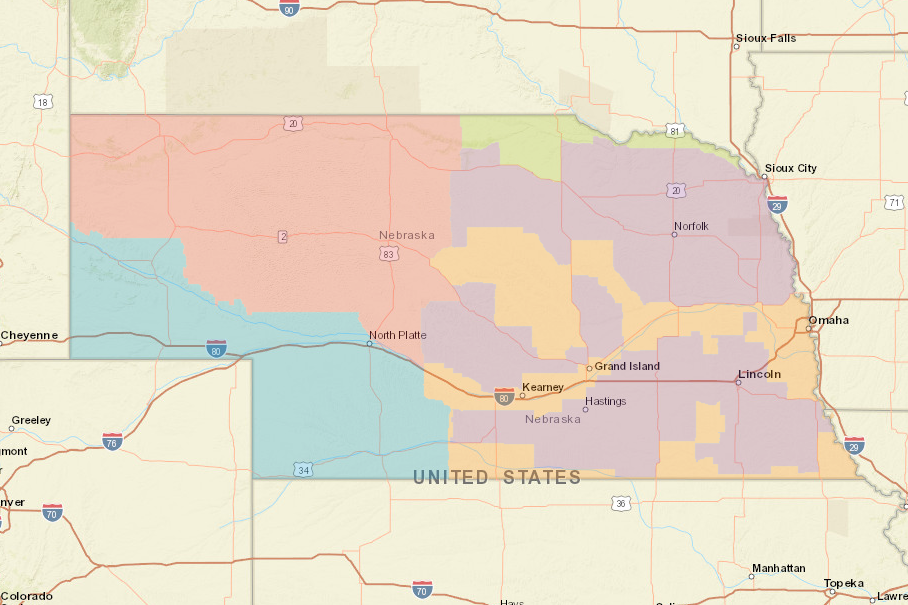
Zone 1 — Oct. 24-Dec. 6, 2026, and Dec. 19, 2026-Jan. 17, 2027
Zone 2 — Oct. 3-Dec. 15, 2026, and Jan. 6-27, 2027 (High Plains)
Zone 3 — Oct. 24, 2026-Jan. 5, 2027, and Jan. 6-27, 2027 (High Plains)
Shooting hours: 30 minutes before sunrise to sunset
Duck daily bag/possession limits
Tier I – Bag limit is six ducks (including mergansers).
- May include no more than five mallards, of which no more than two may be hens,
three wood ducks, one scaup, two redheads, three pintails and two canvasbacks. - The possession limit is three times the daily bag limit.
Tier II – Bag limit is three ducks.
- May include three ducks, including mergansers, of any species, regardless of sex.
- The possession limit is three times the daily bag limit.
Coot daily bag/possession limit
The daily bag for coots is 15. The possession limit is three times the daily bag limit.
Zone 1 — Oct. 17-18, 2026
Zone 2 — Sept. 26-27, 2026
Zone 3 — Oct. 17-18, 2026
Bag and possession limits: Same as regular season
Shooting hours: 30 minutes before sunrise to sunset
Veteran and active-duty military regulations: The season is open for ducks, mergansers, coots and geese.
Zone 1 — Oct. 17-18, 2026
Zone 2 — Sept. 26-27, 2026
Zone 3 — Oct. 17-18, 2026
Bag and possession limits: Same as regular season
Shooting hours: 30 minutes before sunrise to sunset
Youth waterfowl regulations:
- The season is open for ducks, mergansers, coots and geese.
- Nonresident youths must have required permits.
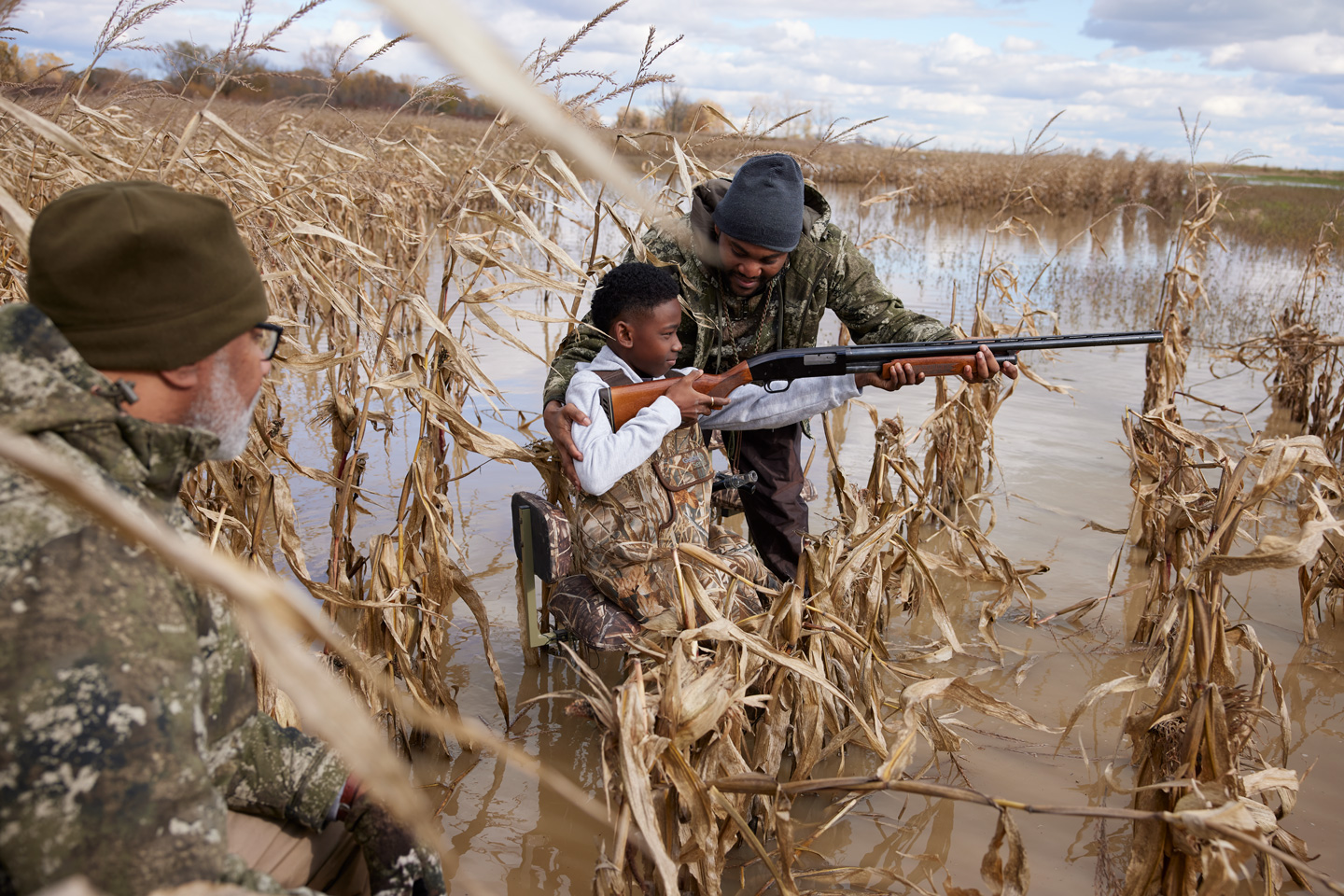
- Youths age 11 or younger must be accompanied by a licensed hunter age 19 or older. The accompanying adult may not hunt waterfowl.
- Youths ages 12 to 15 are required to carry a Hunter Education certification card or Apprentice Hunter Education Exemption Certificate while hunting and must be accompanied by a person at least 19 years old. The adult does not need to be a licensed hunter.
Statewide season: Oct. 17-Dec. 27, 2026, and Jan. 25-Feb. 9, 2027
Daily bag limit: Two
Possession limit: Six
Shooting hours: 30 minutes before sunrise to sunset
Species: White and blue-phase snow geese and Ross’s geese
Statewide season: Oct. 3-Dec. 30, 2026, and Jan. 25-Feb. 9, 2027
Daily bag limit: 50
Possession limit: No limit
Shooting hours: 30 minutes before sunrise to sunset.
Equipment restrictions: The use of unplugged shotguns and electronic calls IS NOT ALLOWED while hunting light geese or any other waterfowl during the regular season.
Season dates
Rainwater Basin Zone: Feb. 10-April 5, 2027
East Zone: Feb. 10-April 15, 2027
West Zone: Feb. 10-April 5, 2027
Daily bag and possession limit: No limits
Shooting hours: 30 minutes before sunrise to 30 minutes after sunset
Equipment restrictions: The use of unplugged shotguns and electronic calls IS ALLOWED while hunting light geese during the conservation order.
Zone restrictions: White and blue-phase snow geese and Ross’s geese may be taken statewide during the conservation order, but different regulations apply in each zone.
West Zone special regulations
It is illegal to hunt March 11-April 5, 2026, within 3 miles of the outer channel of the Platte River between Neb. Hwy. Spur L24B (Overton) and U.S. Hwy. 281.
Rainwater Basin Zone special regulations
It is illegal to hunt:
- on lands owned, controlled or managed by the U.S. Fish and Wildlife Service, EXCEPT Harvard and Cottonwood waterfowl production areas. Hunting is allowed seven days a week.
- on the Ducks Unlimited Verona Complex lands.
- Feb. 10-17, 2026: within a half-mile of the outer channel of the Platte River between Neb. Hwy. Spur 10D (Shelton) and Neb. Hwy. 14.
- Feb. 18-March 4, 2026: within a half-mile of the outer channel of the Platte River between Neb. Hwy. Spur L24B (Overton) and Neb. Hwy. 14.
- March 5-April 5, 2026: within 3 miles of the outer channel of the Platte River between Neb. Hwy. Spur L24B (Overton) and U.S. Hwy. 281 and within a half-mile of the outer channel of the Platte River between U.S. Hwy. 281 and Neb. Hwy. 14.
Lands owned, controlled or managed by the U.S. Fish and Wildlife Service, which are closed during the
Light Goose Conservation Order, except Harvard and Cottonwood waterfowl production areas, are
designated by the sign in the image below on the left.
Lands owned, controlled or managed by the Nebraska Game and Parks Commission, which are open during the Light Goose Conservation Order, are designated by the sign in the image below on the lower right.

The Light Goose Conservation Order was established in 1999 with the objective to reduce snow and Ross’s goose populations damaging subarctic and arctic breeding habitats, as well as wintering and migration areas. Using methods and regulations not allowed during regular waterfowl seasons — such as unplugged shotguns and no daily bag limits — participants began pursuing light geese in unprecedented fashion. Harvest of light geese doubled initially, but quickly leveled off. Indices of light goose populations followed the same pattern.
So, where are we with light goose populations and the conservation order?
The conservation order appears to have worked for reducing and stabilizing the greater snow goose population in the Atlantic Flyway. Greater snow geese were causing large-scale damage at breeding, migration and wintering areas. With implementation of the conservation order, the harvest rate doubled and carryover effects — such as less frequency of nesting and reduced clutch sizes — resulted in a stable population. Currently, there is no evidence of habitat damage in breeding areas and limited damages in migration or wintering areas.
The situation for the midcontinent population of lesser snow and Ross’s geese (combined, known as light geese), is more complex. A decade ago, population estimates were as high as 20 million birds with no sign that the conservation order was having the desired effect. However, recent estimates put the population below 8 million birds and declining. This recent decline is not believed to be a result of the conservation order, as harvest rates remain low and adult survival is high. Preliminary research suggests multiple factors are contributing to low production and recruitment such as an earlier snow melt resulting in nutritional imbalances among goslings.
Several factors contribute to the higher effectiveness of the conservation order on greater snow geese than midcontinent light geese.
- In 1999, the population estimates of light geese were around 5-10 million birds. More recent estimates using refined statistical analysis indicate it may have been at least double that. Thus, the effort needed to reduce the population was underestimated.
- Light geese in the midcontinent appeared to be more flexible in their use of breeding, migration, and wintering areas than greater snows, which are comparably more static.
- Recent research shows a significant portion of light geese harvested in the conservation order may be the “wrong” birds. Evidence indicates decoyed birds, which comprise more than 70% of geese harvested in Nebraska, are in poorer body condition than those jump- or pass-shot. Essentially, the conservation order is not removing enough fit adult females, which needs to occur if the population is to be reduced.
The conservation order should continue in Nebraska until habitat and population objectives are met, whether that is through increased harvest or by the continuance of limiting environmental factors.
Nontoxic shot lethality table
Large geese: Giant, Wester, Atlantic & Interior Canadas
Medium/small geese: Snow, White-fronted & Lesser Canadas
Large ducks: Mallard, Black, Pintail, Goldeneye & Gadwall
Medium ducks: Wigeon, Scaup & Shoveler
| Activity | Range (yards) | Effective shot sizes | Minimum load weight | Minimum hits needed | Minimum pattern count needed | Most effective chokes at distance |
|---|---|---|---|---|---|---|
| Large geese at long range | 50-65 | Steel BBB to T | 1-1/4 oz | 1-2 | 50-55 | Improved modified |
| Large geese at long range | 50-70 | HEVI-Shot 2 to B | 1-1/2 oz | 1-2 | 50-55 | Improved modified, full |
| Large geese over decoys | 35-50 | Steel BB to BBB | 1-1/4 oz | 1-2 | 50-55 | Improved cylinder, modified |
| Large geese over decoys | 35-50 | HEVI-Shot 2 to B | 1-1/2 oz | 1-2 | 50-55 | Improved cylinder, modified |
| Medium/small geese at long range | 50-65 | Steel BB to BBB | 1-1/4 oz | 1-2 | 60-65 | Improved modified |
| Medium/small geese at long range | 50-65 | HEVI-Shot 2 | 1-1/2 oz | 1-2 | 60-65 | Improved modified, full |
| Medium/small geese over decoys | 35-50 | Steel 2 to BB | 1-1/8 oz | 1-2 | 60-65 | Light modified, modified |
| Medium/small geese over decoys | 35-50 | HEVI-Shot 4 to 2 | 1-1/4 oz | 1-2 | 60-65 | Improved cylinder, modified |
| Large ducks at long range | 45-65 | Steel 2 to 1 | 1-1/8 oz | 1-2 | 85-90 | Improved modified, full |
| Large ducks at long range | 45-65 | HEVI-Shot 4 | 1-1/4 oz | 1-2 | 85-90 | Improved modified, full |
| Large ducks over decoys | 20-45 | Steel 6 to 2 | 3/4-1 oz | 1-2 | 85-90 | Improved cylinder (20-35), modified (35-45) |
| Large ducks over decoys | 20-45 | HEVI-Shot 6 to 4 | 1-1/8 oz | 1-2 | 85-90 | Improved cylinder (20-35), modified (35-45) |
| Medium ducks over decoys | 20-45 | Steel 6 to 3 | 1 | 1-2 | 115-120 | Improved cylinder (20-35), modified (35-45) |
| Medium ducks over decoys | 20-45 | HEVI-Shot 6 to 4 | 1-1/8 oz | 1-2 | 115-120 | Improved cylinder (20-35), modified (35-45) |
| Small ducks over decoys | 20-45 | Steel 6 to 4 | 1 | 1-2 | 135-145 | Modified (20-35), full (35-45) |
| Small ducks over decoys | 20-45 | HEVI-Shot 6 | 1-1/8 oz | 1-2 | 135-145 | Modified (20-35), full (35-45) |
| Ring-necked pheasants | 20-50 | Steel 3 to 2 | 1 | 2-3 | 90-95 | Improved cylinder (20-30), modified (30-50) |
| Ring-necked pheasants | 20-50 | HEVI-Shot 6 to 4 | 1-1/8 oz | 2-3 | 90-95 | Improved cylinder (20-30), modified (30-50) |
| Turkeys (head and neck shots) | 20-40 | Steel 4 | 1-1/4 oz | 3-4 | 210-230 | Full or extra full |
| Mourning doves | 20-45 | Steel 8 to 7 | 5/8-3/4 oz | 1-2 | 200-210 | Improved cylinder 8s/light Modified 7s (20-30), modified (more than 30) |
| Mourning doves | 20-45 | HEVI-Shot 7 1/2 | 3/4 | 1-2 | 200-210 | Improved cylinder (20-30), light modified (30-45) |
| Northern bobwhite quail | 20-30 | Steel 7 | 5/8-3/4 oz | 1-2 | 200-210 | Improved cylinder, light modified |
| Swatter loads for wounded birds | 20-30 | Steel 7 to 6 | 1 | 1 | 175 | Improved modified, full |
Additional resources
For duck and waterfowl identification resources, visit the Cornell Lab’s All About Birds website.