Turkey Guide
Plan your next Nebraska turkey hunting trip.

DISCLAIMER – The Nebraska Game and Parks Commission’s Turkey Guide is a summary — and not intended to be a complete digest — of Nebraska’s regulations, orders and statutes pertaining to wild turkey hunting. Automated translations from the original English language content should not be considered exact. View official rules, orders and regulations here.

Download or request a guide
The annual Turkey Guide is also available as a downloadable digital flipbook. If you prefer a hard copy, you can also request a free copy by mail by filling out our brochure request form. Copies are also available at all Game and Parks offices and through our permit vendors.
General information
The Turkey Guide gives you the latest information about wild turkey hunting in Nebraska. Find information about season dates, permit and stamp requirements, public access, regulations and more in the tabs below.
Turkey permits
All turkey hunters in Nebraska must possess a turkey permit to hunt turkeys in Nebraska. A Nebraska hunt (small game) permit is not required to hunt turkeys. A Nebraska Habitat Stamp is valid statewide for the calendar year and required of all hunters in Nebraska, except residents younger than 16 years of age.
EXCEPTION: Farmers, ranchers and qualifying family members who hunt with a landowner permit on land they own or lease for agricultural purposes are exempt.
Hunter Education & residency qualifications
Learn more about permit and stamp requirements, Hunter Education requirements, youth mentor requirements, and residency qualifications in the link below.
Resident turkey permits are unlimited in quantity. There is a limit of 10,000 spring permits available to nonresidents; there is no limit for fall permits.
There are personal limits to how many permits an individual may have in a calendar year. Personal limits are:
- Spring permits – two per person
- Fall permits – one per person
- Landowner permits – one permit in the spring and one in the fall
- Spring turkey – Valid statewide during the spring turkey season for one male or bearded female turkey per permit. A hunter may harvest no more than one turkey per calendar day during the spring season. For age 16 years and older. Resident: $34; Nonresident: $158
- Spring youth turkey – Valid statewide during the spring turkey season for one male or bearded female turkey per permit. A hunter may harvest no more than one turkey per calendar day during the spring season. For age 15 years and younger. No minimum age. Resident: $8.50; Nonresident: $8.50
- Spring landowner turkey – Valid during the spring turkey season for one male or bearded female turkey per permit. A hunter may harvest no more than one turkey per calendar day during the spring season. For age 16 years and older. Resident: $18.50; Nonresident: $80.50. Learn more about landowner permits here.
- Fall turkey – Valid statewide during the fall turkey season for one turkey of either sex. For age 16 years and older. Resident: $34; Nonresident: $158
- Fall youth turkey – Valid statewide during the fall turkey season for one turkey of either sex. For age 15 years and younger. No minimum age. Resident: $8.50; Nonresident: $8.50
- Fall landowner turkey – Valid during the fall turkey season for one turkey of either sex. For age 16 years and older. Resident: $18.50; Nonresident: $80.50
A $3 issuing fee is included in each permit price listed.
Multi-species lottery permits
Nebraska Game and Parks also offers multi-species lottery permits each year. Learn more in the link below.
Turkey permits are available for purchase at Game and Parks permitting offices and at Chadron, Fort Robinson, Niobrara and Ponca state parks, along with Lake McConaughy and Wildcat Hills state recreation areas. Permits are also available online at GoOutdoorsNE.com.
Turkey hunters must also download, print and mail a Big Game Application. Applications must be received at Game and Parks by 5 p.m. on the final day of the application period.
- Permits and stamps are valid for the calendar year as dated, and paper permits must be signed by the permit holder to be valid.
- A hunt (small game) permit is not required to hunt turkeys.
- Turkey permits are not refundable and not transferable.
- It is illegal to lend a permit to another person or borrow a permit from another person.
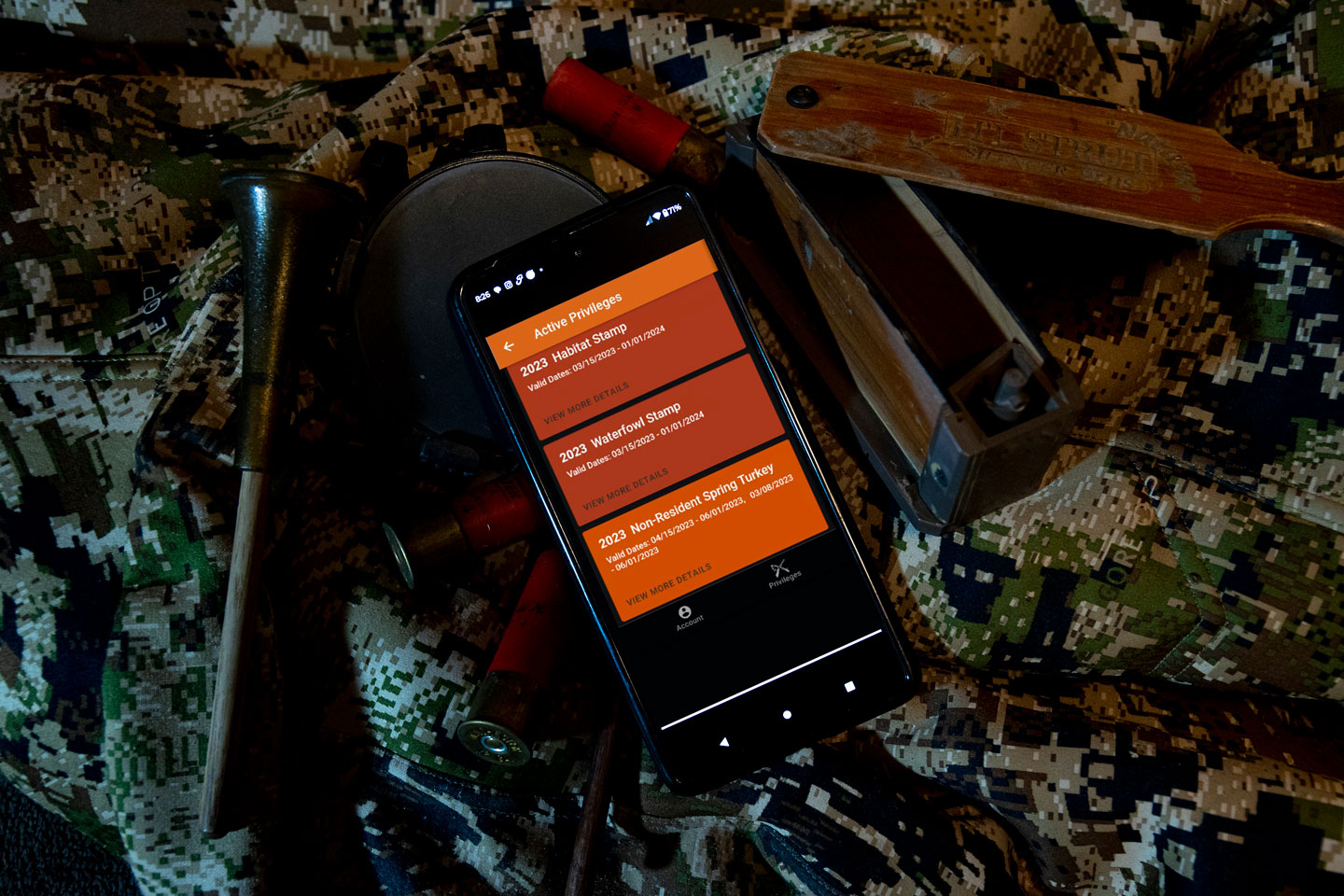
- To access or buy a mobile permit, a user first must have created a profile in the Commission’s electronic permitting system. Within the mobile app, permits and stamps can be purchased with a credit or debit card. Previously purchased permits and stamps, except deer, antelope and elk permits, also can be displayed and saved on mobile devices.
Regulations
Below is a summary of the rules and regulations for wild turkey hunting in Nebraska. Find official rules, orders and regulations here.
Spring season – One male or bearded female turkey per permit per calendar day.
Fall season – One turkey of either sex.
For both spring and fall seasons, shooting hours are 30 minutes before sunrise to sunset. It is unlawful to take or attempt to take any turkey perched in a tree before sunrise.
Spring – It is recommended, but not required, that hunters wear hunter orange during spring turkey seasons.
Fall – Turkey hunters must wear at least 400 square inches of hunter orange on their head, chest and back when hunting during the November firearm deer season which is Nov. 14-22, 2026.
Archery – Hunters must use archery equipment with arrows or spears that have a sharpened hunting head, with a blade of at least 7/16-inch radius, or a blunt (bludgeon) head, with a diameter of at least 9/16-inch. Arrows or spears may not contain poison or a stupefying chemical or have an explosive tip. Archery equipment includes longbows, crossbows, hand-thrown spears, recurve bows and compound bows.
Shotgun – Hunters must use a modern or muzzleloading shotgun that uses shot size 2 or smaller. Slugs are illegal.
Permits are valid statewide, except on state and federal sanctuaries or refuges, unless otherwise authorized.
Paper tagging
Immediately after a turkey is taken, the hunter must punch or notch the permit tag showing the date the bird was taken. This automatically cancels the permit tag. This permit must be kept with the permit holder and/or turkey at all times. When the turkey is not with the permit holder, the entire permit must be attached to the turkey.
E-tagging
The mobile turkey permit allows a hunter to cancel the permit once a turkey is harvested. If a hunter has a mobile permit, a turkey may be left unaccompanied by the hunter only if a document bearing the hunter’s name, permit number and time and date of permit cancellation is kept with the carcass. The cancellation of an e-permit fulfills the Telecheck requirement.
How to cancel a turkey permit
- Log into your permit account at GoOutdoorsNE.com
- Select ‘Active Privileges’
- Select ‘Cancel Permit’ under Spring Turkey permit
- Enter in the required fields (Harvest Date, Time, County, Area of Kill, Sex and Weapon)
- Select ‘Save‘
Checking your turkey
It is required that all turkeys harvested in Nebraska be checked in online or by phone (number is printed on the turkey permit) in a process known as Telecheck. This process must be completed:
- within 48 hours of harvest but no later than 1 p.m. on the day following the close of any portion of the season
- before the turkey carcass leaves Nebraska
Mobile permits must be cancelled and checked immediately after the harvest of the turkey.
How to submit a game check
- Select ‘Game Check Reporting’ under License, Tags, Permits & Applications
- Select ‘Add a Game Check’
- Enter the species and permit number (found in your order history).
- Enter harvest information in the required fields
- ‘Save‘ game check
Only the successful permit holder may possess all or part of a turkey. Anyone may receive as a gift any part of the turkey if a statement of such gift is available to inspect. The statement must include: hunter’s name, telephone number and permit number; species and quantity of each; donor’s signature; recipient’s name; and date of transfer.
It is unlawful to possess any turkey unless the legs, thighs, and breast remain together until the bird is consumed or the bird arrives at the permanent home of the possessor. The breast meat may be removed from the bone but must remain as two entire halves. Birds taken in the spring must have proof of sex consisting of:
1) the legs with spurs naturally attached;
2) the beard naturally attached to the breast; or
3) the detached beard with at least ¼-inch of skin remaining at the attachment site and kept together with the leg, thighs and breast.
It is unlawful to separate the turkey breasts or legs from the carcass before checking the bird.
Unlawful methods
Using electronic calls, live decoys, visible laser or light-projecting sights, and baiting.
Unlawful acts
- trespassing on private land; hunters must get permission to access private land.
- party hunting is illegal; every hunter must shoot his or her own game.
- hunting any game with a rifle within 200 yards of an inhabited dwelling or feedlot and hunting with all other equipment within 100 yards, unless permission has been granted by the owner or tenant.
- driving or disturbing game birds or game animals with or from any aircraft or boat propelled by power or sail.
- harvesting or trapping any game bird from a vehicle.
- wasting game.
- spotlighting from a vehicle or vessel while in possession of a firearm or bow and arrow.
- digging, cutting or destroying natural or planted vegetation on any state-owned or controlled area.
- causing game birds or game animals to depart from a game reserve or game sanctuary.
- using electronically amplified imitations of bird calls, including records, tapes, compact discs, and digital audio files, to take game birds.
- selling or trading the meat of any game bird or game animal.
- communicating the location of any game animal or game bird by radio or other electronic device to or from any aircraft, vessel, vehicle, snowmobile or other conveyance one day before or during the open season.
- having or carrying any shotgun having shells in either the chamber, receiver or magazine in or on any vehicle on any public roadway.
- shooting from any public highway, road or bridge, including the traveled surface and the right-of-way, whether on foot or from a vehicle.
- attempting to shoot any bird, fish or other animal from an aircraft.
It is illegal to hunt any big game animals or turkeys within 200 yards of a baited area. An area is be considered baited for 10 days following the complete removal of all bait.
A baited area is any location where grains, fruits, vegetables, nuts, hay, minerals (including salt), or any other natural food materials, commercial products containing food materials, or byproducts of such materials that may attract big game or turkey.
The use of scents alone, normal environmental conditions, standard farming and ranching practices, forest management, wildlife food plantings, orchard management, or similar land management activities do not constitute a baited area. It also is illegal to create a baited area on lands owned or controlled by the Nebraska Game and Parks Commission.
Fines and penalties can range depending on the severity of the violation and the species involved. Liquidated damages may be assessed and are set by the Nebraska Legislature as replacement costs or the monetary value placed on wildlife taken illegally. Liquidated damages can apply to each animal taken illegally. Final and proposed Nebraska Game and Parks rules and regulations are housed on the Nebraska Secretary of State website.
To report a game violation, call Nebraska Wildlife Crimestoppers toll free at 800-742-7627, use the new online report form.
Invasive species are plants, animals or pathogens that are non-native to an ecosystem. They cause harm to the economy, environment or human health. They interfere with recreation opportunities and affect wildlife. They impact wildlife by significantly reducing desirable wildlife forage, altering thermal and escape cover, affecting water availability for wildlife, and reducing vegetation biodiversity necessary for wildlife survival.
- Before leaving home or camp, inspect and remove all plant parts, animals, mud and other debris from gear, pets and vehicles. Dispose of the debris on site. Do the same before leaving your hunting site.
- Only burn locally sourced firewood to prevent the spread of the emerald ash borer.
For more information, contact Jena Paugels, Nebraska Invasive Species Program Coordinator at [email protected] or visit NEinvasives.com.
Where to hunt
- These areas are state-owned or managed.
- Hunting and trapping is allowed in season, unless otherwise posted or restricted by special area regulations.
- Portable tree stands shall not be installed, used or left in place from Feb. 1 through Aug. 15 on WMAs.
- It is unlawful to build or use permanent or semi-permanent tree stands that attach to any tree with nails, screws, bolts or wire.
- Camping is allowed, unless otherwise posted.
- Fires are allowed only in fireplaces, grills or fire rings, where provided by Game and Parks.
- Use of propane or gas stoves and charcoal grills is allowed.
- Motorized vehicles are restricted to roadways, parking areas or trails designated for such use.
- Target shooting is allowed unless otherwise prohibited.
Portions of some state park areas allow hunting at designated times under special regulations. View the information below and visit our State Park Hunting page for additional details.
State Parks and State Historical Parks
Some SP and SHP lands allow limited managed hunting opportunities.
- Special regulations apply and hunting access permits often are required.
- Parks with managed hunting have several safety requirements in place, including distancing requirements from campgrounds, parking lots and other areas, hunter check-ins and signs posted at designated hunting areas.
- Trapping is authorized by special permit and only when depredation is occurring.
- A park entry permit is required for each vehicle entering a state park or historical park.
State Recreation Areas
- Portions of some SRA lands are open to hunting from the Tuesday following Labor Day through the end of the spring turkey hunting season.
- Hunting and trapping on SRAs is prohibited within 100 yards of any public-use facility or activity area, including picnic areas, campgrounds, private cabins, concession areas, boat ramps and parking lots.
- A park entry permit is required for each vehicle entering an SRA.
In additional to state-managed areas, hunting access opportunities can be found at Waterfowl Production Areas, U.S. Forest Service lands, National Wildlife Refuges, U.S. Army Corps of Engineers lands, Natural Resource Districts, private OFW lands, and more.
Find more details about these lands and additional access programs in the link below.
Annual turkey surveys
Each July and August, the Nebraska Game and Parks Commission collects statewide information on turkey broods and turkey populations. The public is encouraged to help collect this information that is essential for sound turkey management.
At the end of each season, hunters are asked to complete a survey used to estimate hunter success and total harvest. Unlike the mandatory electronic checking of harvested turkeys, this survey is optional.
Hunters who provide an email address at the time of permit purchase will receive an email invitation to participate in the survey. It is important when buying permits online that hunters update their email address if it has changed since they last purchased a permit. Survey results are posted on our Wildlife Surveys page.